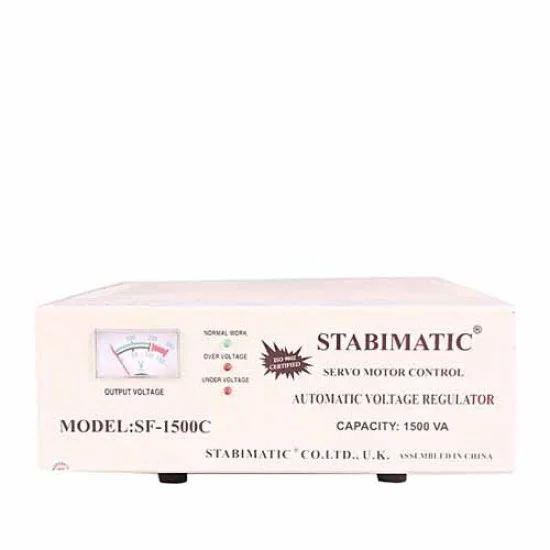
Category: UPS & Voltage Stabilizers

  • AVR Warranty and Protection Features: What They Actually Cover

    AVR Warranty and Protection Features: What They Actually Cover

    Reading Past the Marketing Language

    Almost every stabilizer listing promises to “protect sensitive equipment,” but the specific protection features and warranty terms actually vary by model and series. Knowing what’s listed for a given unit helps you compare beyond just price and VA rating.

    Two Common Protection Patterns

    Across the Stabimatic range, protection features tend to fall into one of two groupings. Some models, like the STABIMATIC WSRS-3000 (Rs. 14,213) and the Stabimatic SR-20000 (Rs. 86,856), list overload, thermal, and surge suppression protection. Others, like the Stabimatic SXD-5000C 5000VA AVR Stabilizer (Rs. 53,693) and the Stabimatic SLC-3KVA Servo Motor Control (Rs. 70,538), list protection against overload, over/under-voltage, and short-circuit conditions instead. Both groupings share overload protection as a baseline, but the additional coverage differs — thermal cutoffs and surge suppression in one case, versus explicit over/under-voltage and short-circuit protection in the other.

    Stabimatic SXD-5000C 5000VA AVR Stabilizer

    Build Quality as Part of Protection

    Physical construction is also part of how these units protect equipment over time. Most of the Stabimatic range, including the WSRS-3000 and the SR-15000 and SR-20000 stabilizers, is built with a metal body, described as durable and low-maintenance, which matters for units expected to run continuously in a utility room or server closet.

    Warranty Coverage: Home Units vs. Enterprise UPS

    Most Stabimatic stabilizers and servo units in this catalogue list a standard 1-year warranty — this applies across capacity tiers, from the entry-level Stabimatic 500C (Rs. 10,528) up to larger units like the Stabimatic SXD-10000C (Rs. 72,500). That’s a meaningfully different arrangement from the enterprise UPS end of the category: the Eaton 9PX10KSP Online UPS 10kVA 9kW (Rs. 315,840) includes a 3-year onsite, parts-and-labor service agreement with 24×7 next-business-day response bundled into the listing — a level of coverage suited to critical IT and networking infrastructure where downtime has a direct business cost.
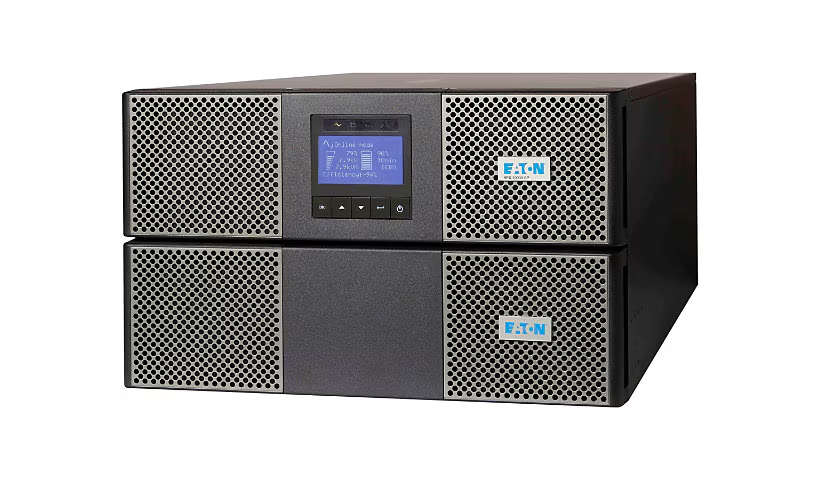
    Eaton 9PX10KSP Online UPS 10kVA 9kW 120/208V 6U Rack/Tower Network Card Included

    Efficiency as a Related Spec

    One more figure worth checking alongside protection and warranty is efficiency, since it’s listed consistently across most of the Stabimatic servo and AVR lineup at ≥98%. It’s not a protection feature as such, but it’s a useful, directly comparable number when two models otherwise look similar on paper.

    Frequently Asked Questions

    What warranty comes with a typical Stabimatic stabilizer?

    Most Stabimatic AVR and servo models in this catalogue list a standard 1-year warranty, regardless of capacity tier.

    What protection features should I compare between models?

    Check whether the listing specifies overload, thermal, and surge suppression (as with the WSRS-3000) or overload, over/under-voltage, and short-circuit protection (as with the SXD-5000C) — both are common patterns across this range.

    Does the Eaton UPS have better support coverage than the Stabimatic stabilizers?

    The Eaton 9PX10KSP includes a 3-year onsite, parts-and-labor, 24×7 next-business-day service agreement, which is more extensive than the standard 1-year warranty listed on most Stabimatic stabilizer models.

    Is efficiency rating related to protection?

    Not directly, but it’s a commonly listed spec alongside protection features — most Stabimatic servo and AVR units in this catalogue list an efficiency rating of ≥98%.
  • Stabimatic AVR Series Compared: SD, SF, GL, SPD, GLD, SXD, SLC, and SDD

    Stabimatic AVR Series Compared: SD, SF, GL, SPD, GLD, SXD, SLC, and SDD

    Why So Many Series?

    Scrolling through the Stabimatic lineup in this category, you’ll notice a handful of different naming series — SD, SF, GL, SPD, GLD, SXD, SLC, and SDD — spanning capacities from 500VA up to 30,000VA. Rather than one continuous product line, these represent different series with their own capacity ranges and, in some cases, different control technology. Here’s how they break down based on what’s actually listed for each.

    Compact Entry Models: SD and SF

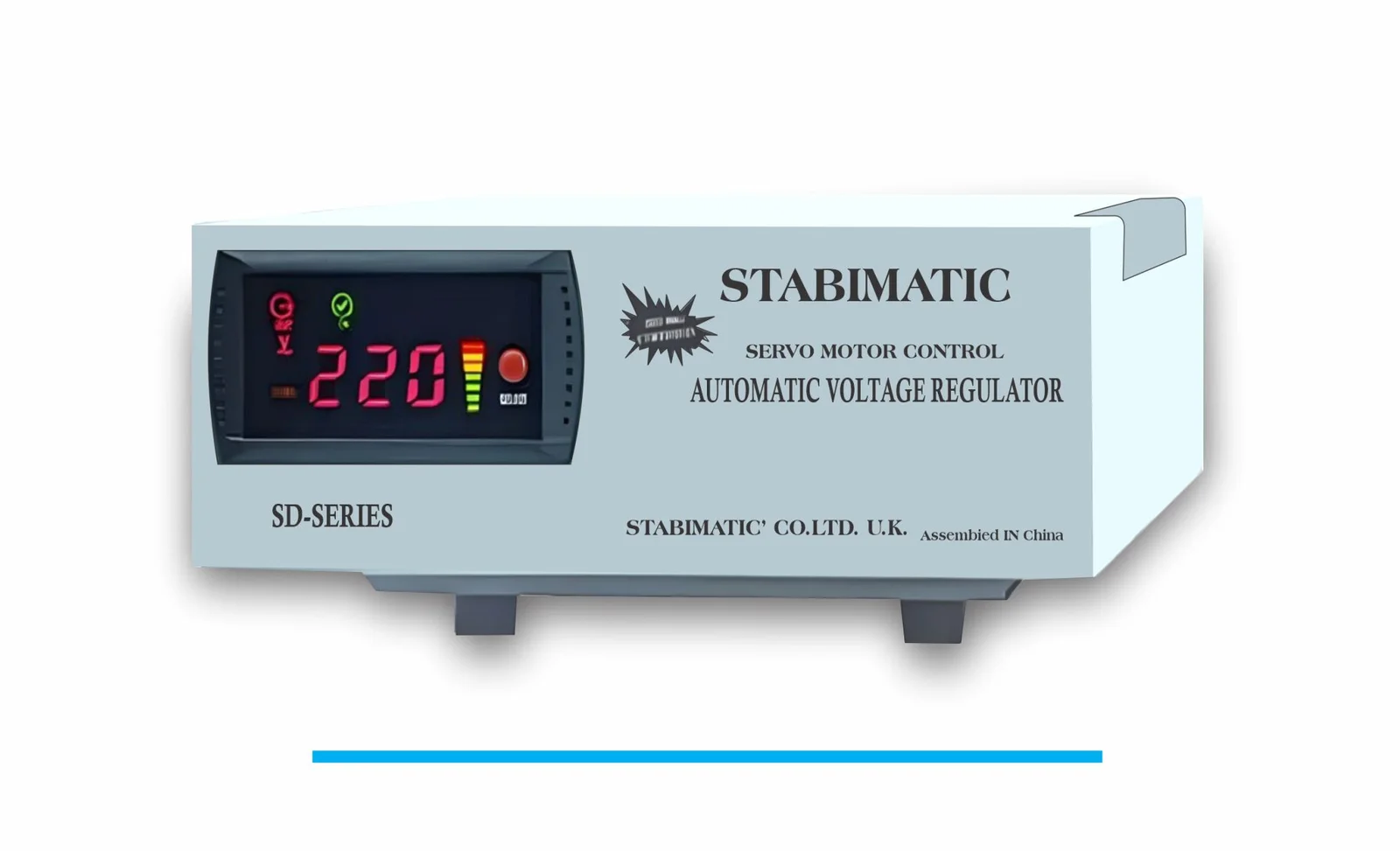
    The SD and SF series sit at the smaller end of the range. The STABIMATIC SD-500C Servo Stabilizer (Rs. 11,581) and STABIMATIC SD-1000C Servo Stabilizer (Rs. 15,266) are both servo motor based units at 500VA and 1000VA respectively. The SF series overlaps closely — the Stabimatic 500C (SF-500VA) (Rs. 10,528) and STABIMATIC SF-1000C (Rs. 15,266) share the same capacities and servo control, while the Stabimatic SF-1500C Automatic Voltage Regulator (Rs. 25,267) extends the SF line to 1500VA as a standard AVR type rather than servo-labeled.

    The GL Series

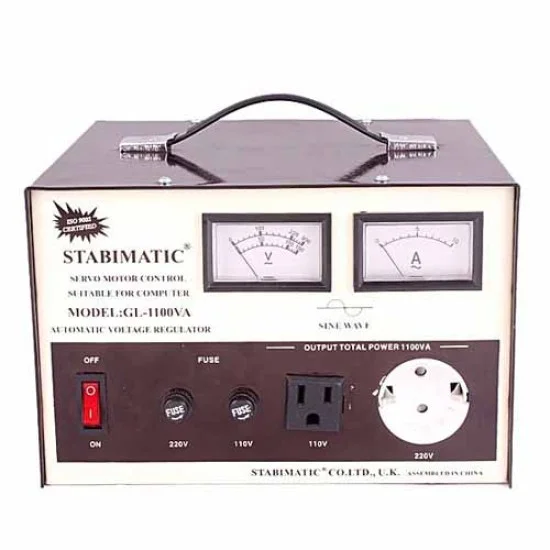
    The GL series covers the 1100VA–1500VA range with the Stabimatic GL-1100C Automatic Voltage Regulator (Rs. 14,739) and STABIMATIC GL-1500C Servo Stabilizer (Rs. 15,000), positioned for home, office, and small commercial use with a 130V–260V approximate input range.

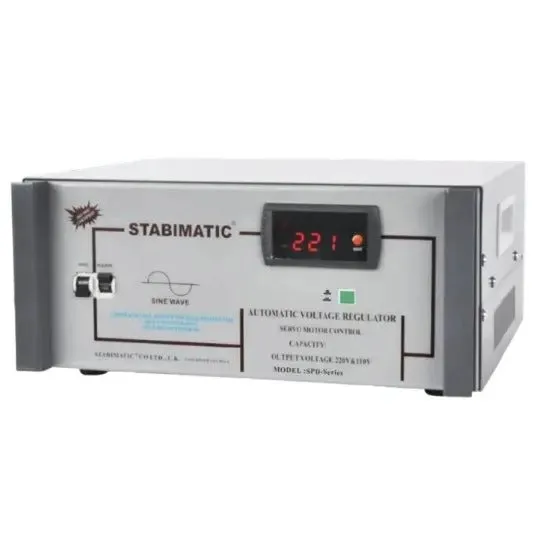
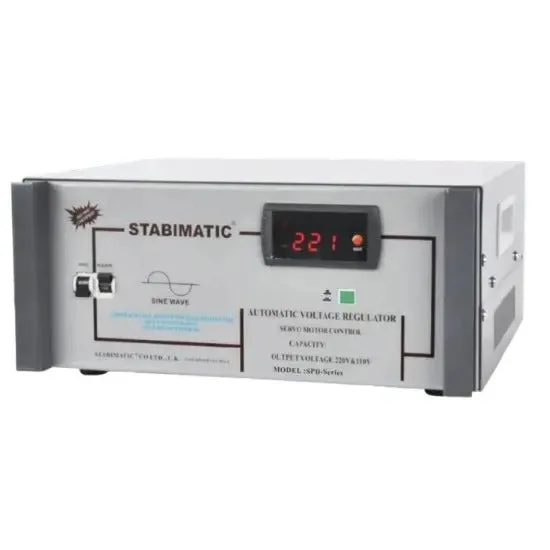
    Stabimatic SPD-3KVA Series  Automatic Voltage Regulator

    Mid-to-High Capacity: SPD, GLD, and SXD

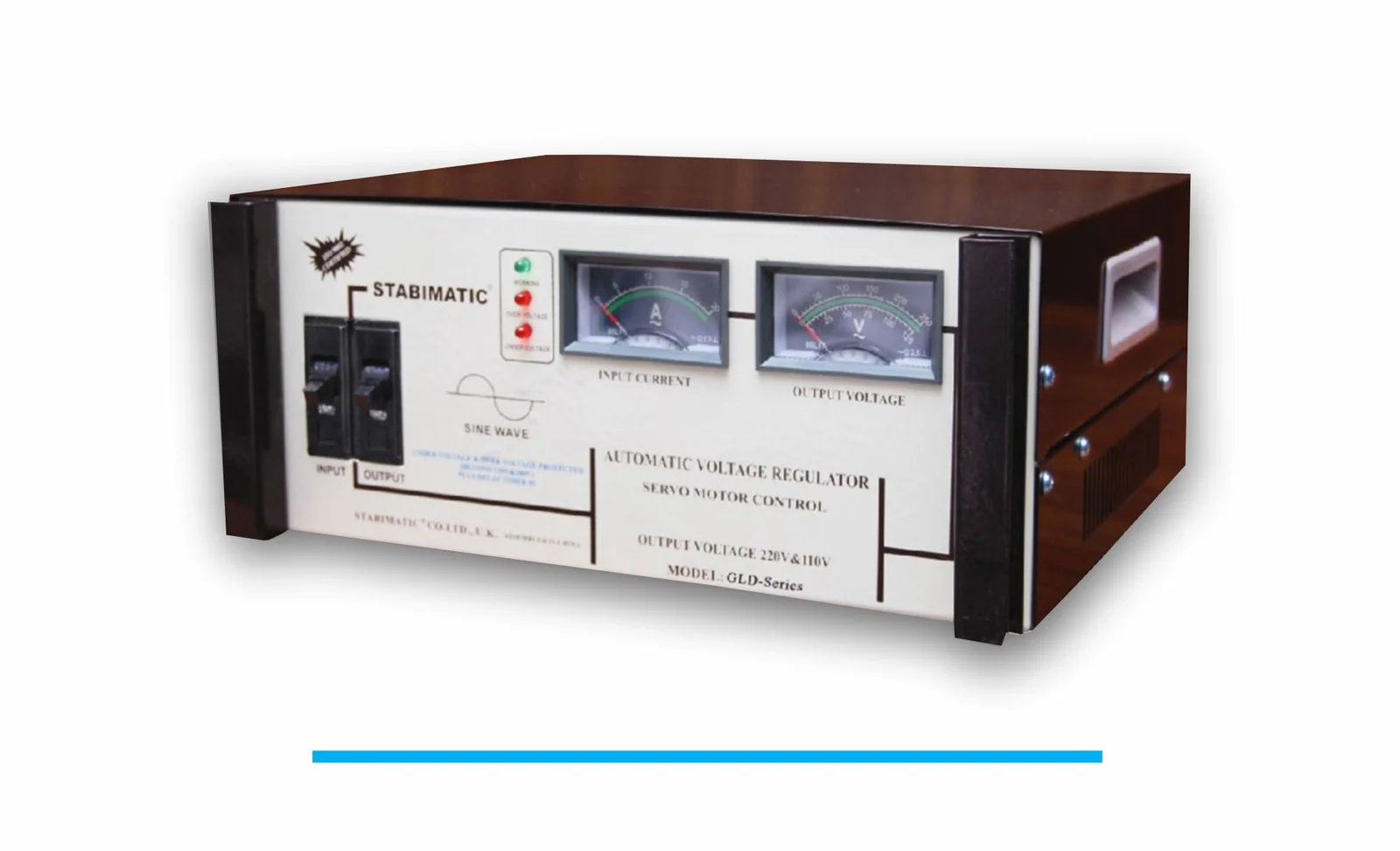
    These three series form the bulk of the 2000VA–10,000VA range and largely overlap in capacity, giving you multiple price points at the same rating. The Stabimatic SPD-3KVA Series (Rs. 38,070) and SPD-10KVA (Rs. 86,950) are listed as standard AVR type units. The GLD series spans from the STABIMATIC GLD-2000C Servo Stabilizer (Rs. 28,500) up to the Stabimatic GLD-8000C Automatic Voltage Regulator (Rs. 79,592), mixing servo-labeled and standard AVR entries. The SXD series runs from the Stabimatic SXD-2000C (Rs. 27,156) up to the Stabimatic SXD-10000C (Rs. 72,500), all listed as AVR voltage stabilizer type with over/under-voltage and short-circuit protection called out specifically.

    STABIMATIC GLD-3000C Servo Stabilizer 3000VA 130V-250V

    Servo Motor Control: SLC and SDD

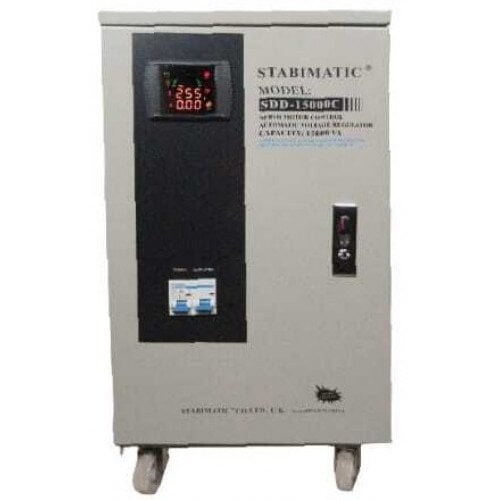
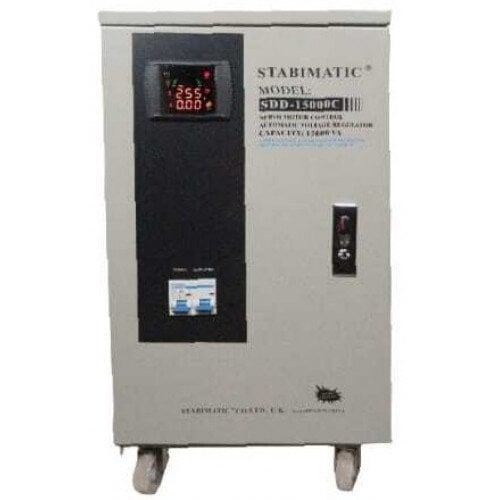
    The SLC series is explicitly labeled “Servo Motor Control” across its range — the Stabimatic SLC-2KVA (Rs. 48,500), SLC-3KVA (Rs. 70,538), and SLC-5KVA (Rs. 91,972) — positioned for small-to-medium industrial and commercial applications. At the top of the lineup, the SDD series is the heavy-duty servo motor control line: the Stabimatic SDD-15KVA (Rs. 175,000) and SDD-30KVA (Rs. 344,000), the two highest-capacity units in the entire category.

    Choosing a Series

    In practice, once you know the VA capacity you need, the series mostly comes down to price and whether the listing specifies servo motor control versus standard AVR type — both approaches appear across this range at comparable efficiency (≥98% where listed) and output regulation (220V ±1%).

    Frequently Asked Questions

    What’s the difference between the SPD, GLD, and SXD series?

    They overlap significantly in capacity (2000VA–10,000VA) and specs, but are distinct product series with different pricing at the same capacity tier — for example, the 3000VA tier includes the SPD-3KVA (Rs. 38,070), GLD-3000C (Rs. 31,584), and SXD-3000C (Rs. 34,914).

    Which series is built for industrial use?

    The SLC series (2kVA–5kVA) is positioned for small-to-medium industrial and commercial applications, while the SDD series (15kVA and 30kVA) is the heaviest-duty servo motor control line in the catalogue.

    Are the SD and SF series the same thing?

    They’re separate series with overlapping capacities and both using servo motor technology at the 500VA and 1000VA tiers, priced very close to each other.

    Which series has the highest capacity option?

    The SDD series tops out at 30kVA with the Stabimatic SDD-30KVA Servo Motor Control, priced at Rs. 344,000 — the highest capacity and price point in the category.

  • Choosing an Industrial-Grade Voltage Stabilizer for Heavy-Duty Equipment

    Choosing an Industrial-Grade Voltage Stabilizer for Heavy-Duty Equipment

    Beyond Home-Scale Protection

    Most stabilizers in this category are sized for home and office appliances, but a smaller group is specifically built and marketed for industrial, commercial, and high-load continuous operation. If you’re running heavier machinery, commercial refrigeration, or a facility with a much larger combined electrical load, these are the models worth looking at first.

    Purpose-Built Heavy-Duty Stabilizers

    The Stabimatic SR-20000 Automatic Voltage Stabilizer (Rs. 86,856, down from Rs. 92,400) is explicitly described as a heavy-duty, high-capacity stabilizer for industrial and commercial high-load equipment, with heavy-duty continuous operation as a listed attribute. Its sibling, the Stabimatic SR-15000 Automatic Voltage Stabilizer (Rs. 76,854, down from Rs. 81,760), targets high-capacity commercial and industrial equipment with the same fast voltage correction response and metal body construction.

    Stabimatic SR-20000 Automatic Voltage  Stabilizer

    The Largest Capacities Available

    For the biggest combined loads, the range extends up to the Stabimatic SDD-15KVA Servo Motor Control Voltage Stabilizer (Rs. 175,000) and the Stabimatic SDD-30KVA Servo Motor Control (Rs. 344,000). Both use servo motor control technology for precise, continuous voltage regulation and are positioned for industrial and commercial electrical systems, with protection covering overload, over/under-voltage, and short-circuit conditions. These are the highest-capacity stabilizers in the catalogue, built for facilities where a wide voltage swing across a large connected load needs continuous correction, not just occasional adjustment.

    Stabimatic SDD-30KVA Servo Motor Control

    Mid-to-High Capacity Alternatives

    If your load doesn’t quite call for 15kVA or 30kVA, there’s a well-populated middle tier: the Stabimatic GLD-8000C Automatic Voltage Regulator (Rs. 79,592), Stabimatic SXD-8000C 8000VA AVR Stabilizer (Rs. 67,000), Stabimatic SXD-10000C 10000VA AVR Stabilizer (Rs. 72,500), and Stabimatic SPD-10KVA Automatic Voltage Regulator (Rs. 86,950) all sit in the 8,000–10,000VA range, giving several price points at essentially the same capacity band for commercial and industrial applications.

    Matching the Unit to the Facility

    As with any stabilizer purchase, capacity should be matched to your actual combined load with reasonable headroom, and the description of each unit’s intended application (home vs. commercial vs. industrial) is a useful signal — the SR-20000, SR-15000, SDD-15KVA, and SDD-30KVA are all explicitly described as industrial/commercial or heavy-duty equipment in their listings, distinguishing them from the home-and-office-oriented models elsewhere in the range.

    Frequently Asked Questions

    What’s the largest-capacity stabilizer available in this category?

    The Stabimatic SDD-30KVA Servo Motor Control, rated at 30kVA and priced at Rs. 344,000, is the highest-capacity unit in the lineup.

    What distinguishes an “industrial” stabilizer from a home model?

    In this catalogue, models like the SR-20000, SR-15000, SDD-15KVA, and SDD-30KVA are explicitly described in their listings as built for industrial, commercial, or heavy-duty continuous operation, versus general home-and-office applications for smaller units.

    Are there mid-range options between home and full industrial capacity?

    Yes — the 8,000VA to 10,000VA tier, including the GLD-8000C, SXD-8000C, SXD-10000C, and SPD-10KVA, offers several options for commercial or larger office use without stepping up to the 15kVA or 30kVA units.

    What protection features do the heavy-duty units include?

    The SDD-15KVA and SDD-30KVA list protection against overload, over/under-voltage, and short-circuit conditions, while the SR-15000 and SR-20000 list overload, thermal, and surge suppression protection.

  • Budget Voltage Stabilizers Under Rs. 15,000 for Home Use

    Budget Voltage Stabilizers Under Rs. 15,000 for Home Use

    Protection Doesn’t Have to Be Expensive

    Voltage stabilizers are one of the more affordable ways to protect individual appliances from grid fluctuations, and the entry tier of the Stabimatic range proves it. If you’re protecting a single appliance or a small cluster of electronics rather than an entire house, there are several genuinely capable options priced well under Rs. 15,000.

    The 500VA Options

    At the very entry point sits the Stabimatic 500C Servo Motor Voltage Stabilizer SF-500VA at Rs. 10,528 (down from Rs. 11,200), the least expensive stabilizer in the catalogue. It uses servo motor technology, accepts a 130V–250V input, and holds output at 220V ±1% with a listed efficiency of ≥98%. Close behind is the STABIMATIC SD-500C Servo Stabilizer 500VA at Rs. 11,581 (down from Rs. 12,320) — same 500VA capacity and the same servo-based control system, giving you a second option at essentially the same price point and specs.

    Stabimatic 500C Servo Motor Voltage Stabilizer SF-500VA

    Stepping Up Within Budget

    If 500VA isn’t quite enough for what you’re protecting, the STABIMATIC WSRS-3000 Automatic Voltage Stabilizer at Rs. 14,213 (down from Rs. 15,120) is built for general home and office appliances, with a metal body and overload, thermal, and surge protection. The Stabimatic GL-1100C Automatic Voltage Regulator at Rs. 14,739 (down from Rs. 15,680) offers 1100VA of capacity with a wider 140V–260V input tolerance. And right at the Rs. 15,000 mark, the STABIMATIC GL-1500C Servo Stabilizer — not currently on sale, priced at Rs. 15,000 flat — bumps capacity up to 1500VA with a 130V–250V input range.

    STABIMATIC GL-1500C  Servo Stabilizer 1500VA 130V-250V

    What to Expect at This Price Point

    All of these units share a similar feature set: automatic voltage correction to roughly 220V, protection against overload and surges, durable metal or compact enclosures, and (where listed) a 1-year warranty. What differs is capacity — 500VA versus 1100VA versus 1500VA — so the right pick depends on what you’re plugging in. A single TV, router, or small fridge is comfortably covered by the 500VA units; a slightly heavier single appliance or a couple of devices together is better matched to the WSRS-3000, GL-1100C, or GL-1500C.

    Frequently Asked Questions

    What’s the cheapest stabilizer in this catalogue?

    The Stabimatic 500C Servo Motor Voltage Stabilizer SF-500VA, currently priced at Rs. 10,528 (down from Rs. 11,200), is the least expensive option.

    What’s the difference between the 500C and the SD-500C?

    Both are rated at 500VA with servo motor control and near-identical specs — the SD-500C is priced slightly higher at Rs. 11,581 versus Rs. 10,528 for the 500C, so they function as close alternatives at the same capacity.

    Is a 500VA stabilizer enough for a whole room?

    It depends on the combined load. 500VA units are best suited to a single appliance or a couple of low-draw electronics; for a room with several devices, an 1100VA or 1500VA option like the GL-1100C or GL-1500C gives more headroom.

    Do these budget stabilizers come with a warranty?

    The Stabimatic servo and AVR units in this range list a 1-year warranty as a standard attribute.

  • How Long Can a UPS Power Your Devices? Understanding Runtime

    How Long Can a UPS Power Your Devices? Understanding Runtime

    Runtime Is Not a Fixed Number

    One of the most common misunderstandings about a UPS is treating its runtime as a single fixed figure. In reality, runtime is directly tied to how much load you’re drawing from it at the moment power fails — the heavier the load, the shorter the runtime, and vice versa. Manufacturers typically publish a full-load runtime figure as the worst-case reference point, and that’s the number worth paying attention to when you’re sizing a UPS against real equipment.

    A Real Example: APC SRV3KI

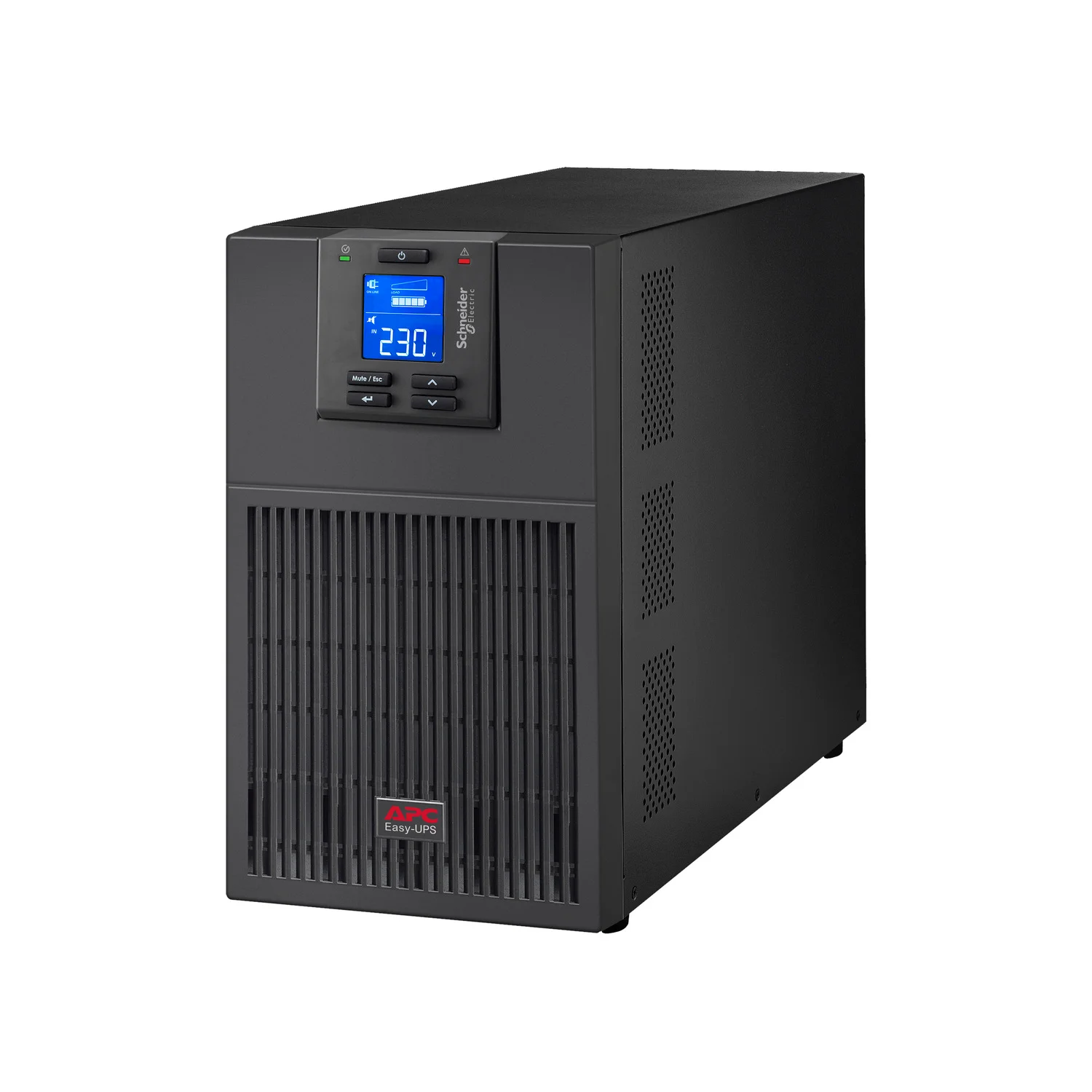
    The APC SRV3KI Easy UPS On-Line SRV 3000VA 230V (Rs. 277,097) is rated for 3000VA / 2400W, and its listed runtime at full load is 4 minutes 24 seconds. That short window is by design — this is an on-line, double-conversion UPS meant to keep servers and networking equipment running cleanly through brief interruptions and voltage events, and to bridge to a generator or an orderly shutdown, not to power a full load for an extended stretch. The unit also runs an energy-saving ECO mode and uses intelligent, temperature-compensated charging to help prolong battery life over time, and is rated at 88% efficiency at full load.

    APC SRV3KI Easy UPS On-Line SRV 3000VA  230V

    Why Load Matters So Much

    Because the published runtime figure is measured at full load, actually drawing less than the unit’s rated capacity generally extends how long it can keep equipment running — this is a basic characteristic of how battery-based UPS units work, though the exact relationship depends on the specific battery and equipment involved rather than a number we can quote here. The practical takeaway: don’t size a UPS purely to your equipment’s rated draw with zero headroom, since running near full capacity is exactly the scenario where you’ll see the shortest runtime figure.

    Battery Design Also Plays a Role

    For larger installations where extended runtime and easy maintenance matter more, the Eaton 9PX10KSP Online UPS 10kVA 9kW (Rs. 315,840) uses hot-swappable VRLA batteries along with Eaton’s ABM battery technology, which is rated to extend battery life by 50% compared to conventional charging approaches. Hot-swappable batteries also mean that when battery replacement is eventually needed, it can be done without powering down connected equipment — a practical advantage for infrastructure that needs to stay online continuously.

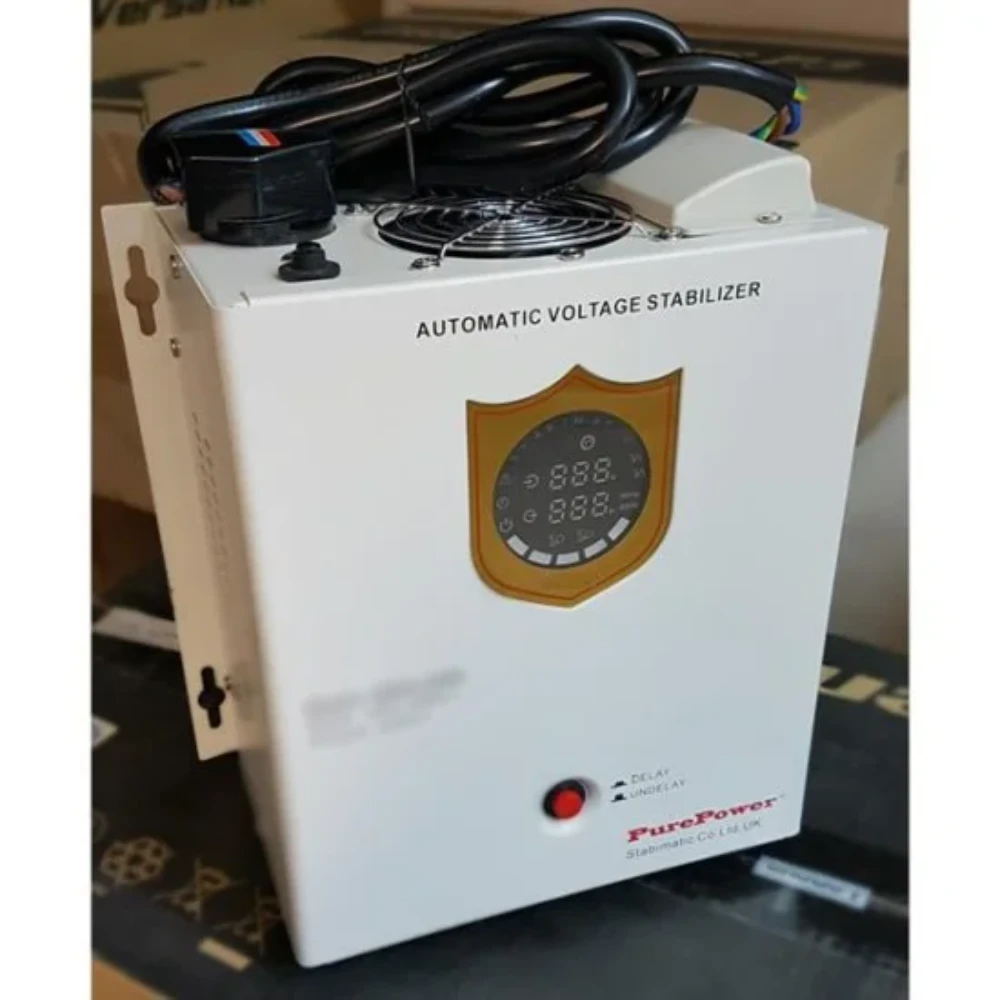
    Stabimatic SPD-5KVA Servo Automatic Voltage Regulator

    What a Stabilizer Can’t Do Here

    It’s worth repeating the distinction from elsewhere in this category: units like the Stabimatic SPD-5KVA Servo Automatic Voltage Regulator (Rs. 54,520) have no battery and therefore no runtime at all during a full outage — their job is purely voltage correction while power is present, not backup power when it isn’t.

    Frequently Asked Questions

    What is the full-load runtime of the APC SRV3KI?

    It’s listed at 4 minutes 24 seconds at full load (3000VA / 2400W), which is designed to bridge short outages rather than sustain a full load for an extended period.

    Does a lighter load always mean longer runtime?

    Generally, yes — battery-based UPS units are rated for their shortest runtime at full load, so running below full capacity typically extends how long the battery lasts, though the exact figures depend on the specific setup.

    Does the Eaton 9PX10KSP have a longer runtime than the APC SRV3KI?

    The exact runtime figures differ by configuration and load, but the Eaton 9PX10KSP is built with hot-swappable batteries and ABM battery technology rated for 50% longer battery life, aimed at larger, continuous commercial deployments.

    Why doesn’t a stabilizer have a runtime rating?

    Because stabilizers like the Stabimatic SPD-5KVA don’t contain a battery — they regulate voltage while grid power is present but provide no backup power during a full outage.

  • Online Double-Conversion UPS Explained: When Your Business Needs One

    Online Double-Conversion UPS Explained: When Your Business Needs One

    Why “Online” Matters

    Not all UPS units work the same way. Standard backup UPS units sit idle and switch over to battery only when they detect a power problem, which introduces a brief transfer delay. On-line, double-conversion UPS units instead run continuously through their inverter, converting incoming AC to DC and back to clean AC output at all times — so there’s no switchover gap when the grid fails. That distinction matters most for servers, networking equipment, and other infrastructure where even a fraction-of-a-second interruption can cause a crash or data loss.

    Two Options at Different Scales

    For small-to-medium server rooms or network racks, the APC SRV3KI Easy UPS On-Line SRV 3000VA 230V (Rs. 277,097, down from Rs. 313,600) delivers 3000VA / 2400W of on-line, double-conversion, pure sine wave power. It’s designed for IT professionals to maintain business uptime, runs at 88% efficiency at full load, and includes an energy-saving ECO mode along with intelligent temperature-compensated charging to prolong battery life. Output connections include six IEC 60320 C13 and one C19 socket, and full-load runtime is listed at 4 minutes 24 seconds — enough to bridge a short outage or hand off cleanly to a generator.

    APC SRV3KI Easy UPS On-Line SRV 3000VA  230V

    Scaling Up: Eaton 9PX10KSP

    For larger commercial or telecom setups, the Eaton 9PX10KSP Online UPS 10kVA 9kW (Rs. 315,840, down from Rs. 336,000) is built for a 6001–11000VA capacity range in a 6U rack/tower convertible form factor. It ships with a NETWORK-M2 management card included, so it can be monitored and managed over the network out of the box. Eaton’s ABM battery technology is rated to extend battery life by 50% over conventional charging, and the batteries themselves are hot-swappable, meaning they can be replaced without powering down connected equipment. It also outputs pure sine-wave AC and comes bundled with a 3-year onsite, parts-and-labor service agreement with 24×7 next-business-day response — a meaningful consideration for infrastructure that can’t tolerate extended downtime while waiting on a repair.

    Eaton 9PX10KSP Online UPS 10kVA 9kW 120/208V 6U Rack/Tower Network Card Included

    Choosing Between Them

    The right choice comes down to scale. A single server, a small network cabinet, or a point-of-sale back office fits comfortably within the APC SRV3KI’s 3000VA capacity. Larger deployments — multiple racks, telecom equipment, or commercial data closets — call for the higher capacity and bundled service coverage of the Eaton 9PX10KSP.

    Frequently Asked Questions

    What does “double-conversion” mean on a UPS spec sheet?

    It means the UPS continuously converts incoming AC power to DC and back to AC to power your equipment, rather than switching to battery only when the input fails. Both the APC SRV3KI and Eaton 9PX10KSP use this on-line double-conversion design.

    How long will these units run during an outage?

    The APC SRV3KI lists a full-load runtime of 4 minutes 24 seconds. That’s designed to bridge short outages or allow a clean handoff to a generator, not to run equipment for extended periods.

    Does the Eaton unit come with support?

    Yes, the Eaton 9PX10KSP includes a 3-year onsite, parts-and-labor service plan with 24×7 next-business-day response as part of its listing.

    Can these UPS units be monitored remotely?

    The Eaton 9PX10KSP includes a NETWORK-M2 management card, enabling network-based monitoring and management out of the box.

  • Signs Your Home Needs a Voltage Stabilizer

    Signs Your Home Needs a Voltage Stabilizer

    Voltage Problems Aren’t Always Obvious

    Pakistan’s power grid is known for two separate issues: outright outages from load-shedding, and voltage that swings above or below the standard level even when the power is technically “on.” The second problem is quieter — you might not notice it happening, but it can shorten the working life of motors, compressors, and electronics over months and years. A voltage stabilizer’s job is to catch that swing and correct it before it reaches your appliances.

    Common Warning Signs

    • Lights that flicker or dim noticeably when a large appliance (like a fridge compressor or air conditioner) switches on.
    • Fans or motors that run slower than usual, sound strained, or hum more than normal.
    • Electronics or chargers that feel unusually warm.
    • Appliances that trip or shut off during minor grid disturbances rather than brief total outages.

    None of these are exclusive to a single cause, but they’re the kind of symptoms that point toward unstable input voltage rather than a wiring or appliance fault, and they’re exactly what an AVR is designed to address.

    What a Stabilizer Does About It

    The STABIMATIC WSRS-3000 Automatic Voltage Stabilizer (Rs. 14,213) is built specifically for this — it watches incoming voltage and applies automatic voltage regulation to keep output steady, with overload, thermal, and surge protection built into a metal enclosure designed for home and office use. For smaller individual appliances, the Stabimatic GL-1100C Automatic Voltage Regulator (Rs. 14,739) offers 1100VA of protection across a 140V–260V input range, correcting to a steady 220V ±1% output.

    STABIMATIC WSRS-3000 AUTOMATIC VOLTAGE  STABILIZER

    When One Stabilizer Isn’t Enough

    If the symptoms above show up across multiple appliances or rooms rather than one specific device, it usually points to a broader supply issue, and a single small stabilizer sized for one appliance won’t cover it. For homes running several appliances or heavier equipment simultaneously, a higher-capacity option like the Stabimatic SPD-5KVA Servo Automatic Voltage Regulator (Rs. 54,520) is built for exactly this — home, office, and light commercial applications with a larger combined load, using servo motor technology to track voltage continuously.

    Stabimatic GL-1100C Automatic Voltage Regulator

    Whichever size fits your situation, the underlying protection features tend to repeat across the Stabimatic range: overload protection, surge suppression, and either thermal cutoffs or over/under-voltage and short-circuit protection, all housed in a durable metal body meant for continuous use.

    Frequently Asked Questions

    Will a stabilizer stop my appliances from being damaged during voltage spikes?

    Stabilizers like the STABIMATIC WSRS-3000 include surge suppression and overload protection specifically to guard against this kind of damage from voltage spikes and fluctuations.

    Do I need a stabilizer if I already have a UPS?

    Possibly — a UPS protects against complete outages using a battery, but a stabilizer protects against voltage fluctuations during normal operation, which a battery-based UPS isn’t necessarily designed to correct for continuously.

    How do I know what size stabilizer I need for my whole home?

    It depends on your combined appliance load. Entry-level units like the WSRS-3000 or GL-1100C suit smaller individual loads, while higher-capacity options like the Stabimatic SPD-5KVA are built for home, office, and light commercial use with heavier combined demand.

    What protection features should I look for?

    Look for overload protection at minimum; many Stabimatic models add thermal cutoffs, surge suppression, or over/under-voltage and short-circuit protection depending on the specific series.

  • Servo Motor Stabilizers vs Standard AVR: What’s the Real Difference?

    Servo Motor Stabilizers vs Standard AVR: What’s the Real Difference?

    Two Control Methods, Same Goal

    Every stabilizer in this category exists to do one thing: keep output voltage steady at roughly 220V despite whatever the incoming grid supply is doing. But look closely at the product attributes and you’ll notice two different approaches listed across the Stabimatic range — “Servo Motor Based” control systems, and units simply labeled as an “Automatic Voltage Regulator (AVR).” Both correct voltage automatically; they just do it with different internal mechanisms, and that has practical implications for precision and use case.

    Servo Motor Control

    Servo-based stabilizers use a motor-driven variable transformer that continuously adjusts to track the input voltage. In this catalogue, that includes compact units like the Stabimatic 500C Servo Motor Voltage Stabilizer SF-500VA (Rs. 10,528) and STABIMATIC SD-1000C Servo Stabilizer 1000VA (Rs. 15,266), both listing an efficiency of ≥98% and a 220V ±1% output. The servo approach scales all the way up the range too — the Stabimatic SLC-5KVA Servo Motor Control (Rs. 91,972) and the heavy-duty Stabimatic SDD-30KVA Servo Motor Control (Rs. 344,000) both use the same servo-based correction, just at industrial capacity.

    STABIMATIC SD-1000C Servo Stabilizer 1000VA 130V-250V

    Standard AVR Units

    Other models in the range are simply listed under “Type: Automatic Voltage Regulator (AVR)” without a servo motor control system called out specifically — for example, the Stabimatic GL-1100C Automatic Voltage Regulator (Rs. 14,739), the Stabimatic SPD-3KVA Series (Rs. 38,070), and the Stabimatic GLD-5000C (Rs. 61,315). These still deliver automatic correction and the same 220V ±1% output with ≥98% efficiency listed in their specs, and carry the same overload, over/under-voltage, and short-circuit protection features found across the range.

    Does It Matter Which You Choose?

    For most home and office use, either approach delivers the core promise: steady output voltage and protection from spikes, drops, and fluctuations. Where it can matter more is in heavy-duty or industrial settings with wide voltage swings and continuous operation — which is why Stabimatic’s larger servo-based units, like the Stabimatic SDD-15KVA Servo Motor Control (Rs. 175,000), are positioned for industrial and commercial electrical systems that need to track voltage continuously over long duty cycles.

    Stabimatic SDD-15KVA Servo Motor Control Voltage Stabilizer

    In practice, the decision usually comes down to matching the capacity (VA rating) and application (home, office, or industrial) to your actual load, then comparing price across the servo and standard AVR options available at that capacity — as with the 3000VA tier, where the servo-based STABIMATIC GLD-3000C Servo Stabilizer (Rs. 31,584) and the standard AVR Stabimatic SXD-3000C (Rs. 34,914) sit close together on price.

    Frequently Asked Questions

    What does “servo motor based” mean on a stabilizer’s spec sheet?

    It means the unit uses a motor-driven variable transformer to continuously correct voltage. Models like the Stabimatic 500C and SD-1000C list this as their control system, alongside a ≥98% efficiency rating.

    Are standard AVR units less effective than servo models?

    Not based on the listed specs — standard AVR units like the Stabimatic GL-1100C and SPD-3KVA carry the same 220V ±1% output and ≥98% efficiency figures as the servo-based models in this catalogue.

    Which technology is used in the largest industrial units?

    The largest units here, the Stabimatic SDD-15KVA (Rs. 175,000) and SDD-30KVA (Rs. 344,000), both use servo motor control, positioned for industrial and commercial electrical systems.

    Do both types carry the same protection features?

    Protection features vary by series rather than by servo vs. AVR classification — most models in this catalogue list overload protection plus either thermal/surge suppression or over/under-voltage and short-circuit protection, depending on the specific line.

  • How to Choose the Right VA Capacity Stabilizer for Your Home

    How to Choose the Right VA Capacity Stabilizer for Your Home

    Start With What You’re Protecting

    Every voltage stabilizer is rated in VA (volt-amps), and that number tells you the maximum load it can safely regulate. Undersize it and it’ll trip or fail to protect properly under load; oversize it and you’re paying for capacity you don’t need. The Stabimatic range sold here runs from small 500VA units up to 10,000VA and beyond, so there’s a practical starting point for almost any setup.

    Small Loads: 500VA–1000VA

    For a single appliance, a router, a TV, or a small refrigerator, the entry-level models are usually enough. The Stabimatic 500C Servo Motor Voltage Stabilizer SF-500VA (Rs. 10,528) and the STABIMATIC SD-500C Servo Stabilizer 500VA (Rs. 11,581) are both rated at 500VA with a 130V–250V input range and servo motor control for continuous correction. Step up to 1000VA with the STABIMATIC SF-1000C or SD-1000C (both Rs. 15,266) if you’re running a slightly heavier single appliance or a couple of small electronics together.

    Mid-Size Loads: 1100VA–2000VA

    This is where most single-appliance or small-room setups land. The Stabimatic GL-1100C Automatic Voltage Regulator (Rs. 14,739, 1100VA) and Stabimatic SF-1500C Automatic Voltage Regulator (Rs. 25,267, 1500VA) cover mid-range home appliances. Moving further up, the 2000VA tier includes the Stabimatic SPD-2KVA (Rs. 33,960), GLD-2000C (Rs. 28,500), and SXD-2000C (Rs. 27,156) — all rated for 2000VA with a 220V ±1% output and roughly 150V–250V input tolerance, giving you some price flexibility at the same capacity.

    Stabimatic SF-1500C Automatic Voltage Regulator

    Larger Loads: 3000VA and Above

    Households running multiple heavier appliances at once, or small offices, typically need 3000VA or more. Options here include the Stabimatic SPD-3KVA (Rs. 38,070), GLD-3000C (Rs. 31,584), and SXD-3000C (Rs. 34,914). For whole-home or light commercial coverage, the range extends to 5000VA (SPD-5KVA, Rs. 54,520; SXD-5000C, Rs. 53,693), 8000VA (GLD-8000C, Rs. 79,592; SXD-8000C, Rs. 67,000), and all the way to 10,000VA (SPD-10KVA, Rs. 86,950; SXD-10000C, Rs. 72,500).

    Stabimatic SPD-2KVA Automatic Voltage Regulator

    A Simple Way to Think About It

    • List the appliances you actually want protected, not your whole house, unless that’s the goal.
    • Add some headroom rather than sizing to the exact edge of a unit’s rating.
    • Check the input voltage range too — most of these Stabimatic units accept roughly 130V–260V input and hold output at 220V ±1%, which matters if your area sees wide voltage swings.

    Frequently Asked Questions

    What does VA rating actually mean?

    VA (volt-amps) is the capacity rating that tells you the maximum electrical load a stabilizer can regulate. Stabimatic models in this catalogue range from 500VA units like the Stabimatic 500C up to 30,000VA industrial units.

    Is a higher VA rating always better?

    Not necessarily for cost — a bigger unit than you need just adds expense. Match the VA rating to your actual combined appliance load with some reasonable headroom rather than buying the largest available model.

    What’s the difference between the 2000VA models at different prices?

    The SPD-2KVA (Rs. 33,960), GLD-2000C (Rs. 28,500), and SXD-2000C (Rs. 27,156) are all rated at 2000VA with similar input/output specs but belong to different Stabimatic series, so pricing varies by model line and features.

    Can these stabilizers handle Pakistan’s typical voltage swings?

    The Stabimatic units listed here are built with input ranges of roughly 130V–260V and correct output to 220V ±1%, which is designed to handle the kind of fluctuation common on local grids.

  • UPS vs Voltage Stabilizer: What’s the Difference and Which One Do You Need?

    UPS vs Voltage Stabilizer: What’s the Difference and Which One Do You Need?

    Two Different Jobs, Often Confused

    If you’ve browsed our UPS / AVR category, you’ve probably noticed it holds two very different kinds of products: uninterruptible power supplies (UPS) like the APC SRV3KI Easy UPS On-Line SRV 3000VA 230V (Rs. 277,097), and automatic voltage stabilizers like the STABIMATIC WSRS-3000 Automatic Voltage Stabilizer (Rs. 14,213). Both sit between the wall socket and your appliances, and both are marketed as “power protection” — but they don’t do the same job, and picking the wrong one leaves a real gap in your protection.

    What a UPS Actually Does

    A UPS contains a battery. When the power goes out completely — which, given how common load-shedding is across Pakistan, is a real everyday scenario — the UPS switches your connected equipment onto battery power, keeping it running through the outage. The APC SRV3KI is a 3000VA / 2400W on-line, double-conversion UPS that continuously produces pure sine wave power rather than switching over after a delay, and lists an 88% efficiency rating at full load with roughly 4 minutes 24 seconds of runtime at full load. That short full-load runtime is typical of on-line UPS units designed to bridge you to a generator or simply protect against short outages and sags, not to run a household for hours.

    At the top end of the category, the Eaton 9PX10KSP Online UPS 10kVA 9kW (Rs. 315,840, down from Rs. 336,000) is built for server rooms and network racks. It’s rack/tower convertible, ships with a network management card, uses hot-swappable batteries with Eaton’s ABM battery technology for extended battery life, and comes with a 3-year onsite parts-and-labor service plan with 24×7 next-business-day support — the kind of coverage commercial IT infrastructure needs.

    APC SRV3KI Easy UPS On-Line SRV 3000VA  230V

    What an AVR / Stabilizer Actually Does

    An automatic voltage stabilizer (AVR) has no battery at all. Its job is to watch the incoming voltage and correct it in real time, so appliances always see a steady output even when the grid is delivering too much or too little. The STABIMATIC WSRS-3000 is built for exactly this — automatic voltage regulation with overload, thermal, and surge protection in a metal enclosure, aimed at general home and office appliances. Similarly, the Stabimatic GL-1100C Automatic Voltage Regulator (Rs. 14,739) is rated at 1100VA and holds output to 220V ±1% across an input range of roughly 140V–260V.

    Because there’s no battery, a stabilizer can’t keep anything running through a total blackout. What it does instead is protect equipment from the damage caused by voltage swings, spikes, and brownouts on the local grid — the kind of fluctuation that can shorten the life of motors, compressors, and electronics over time even when the power never fully cuts out.

    Which One Do You Need?

    • If you need equipment to keep running during an actual outage (a PC, a network setup, a point-of-sale system), you need a UPS with a battery, like the APC SRV3KI or, for larger commercial loads, the Eaton 9PX10KSP.
    • If your main concern is protecting appliances from voltage spikes, sags, and fluctuations on the grid, an AVR stabilizer like the WSRS-3000 or GL-1100C is the more cost-effective choice.
    • For maximum protection, many households run both: a stabilizer ahead of heavier appliances, and a UPS dedicated to whatever needs to survive a full outage.

    STABIMATIC WSRS-3000 AUTOMATIC VOLTAGE  STABILIZER

    Frequently Asked Questions

    Can a voltage stabilizer replace a UPS?

    No. A stabilizer like the STABIMATIC WSRS-3000 corrects voltage but has no battery, so it cannot keep equipment powered during a complete outage. For backup power you need a battery-based UPS such as the APC SRV3KI.

    Does a UPS also protect against voltage fluctuations?

    Yes, on-line double-conversion units like the APC SRV3KI and Eaton 9PX10KSP continuously regenerate clean pure sine wave output, which naturally smooths out incoming voltage fluctuations as part of how they operate.

    Which is cheaper, a UPS or a stabilizer?

    In this catalogue, stabilizers are generally the more affordable entry point — the STABIMATIC WSRS-3000 is Rs. 14,213 — while UPS units with battery backup and on-line double-conversion technology, such as the APC SRV3KI at Rs. 277,097, cost significantly more.

    Do I need a service plan with an enterprise UPS?

    For business-critical use, it’s worth considering. The Eaton 9PX10KSP comes bundled with a 3-year onsite, parts-and-labor, 24×7 next-business-day service plan, which matters for equipment supporting servers or networking infrastructure that can’t tolerate long downtime.