Three Tiers, One Growth Path
Once a NAS is doing real work for a business — hosting shared files, running backups for a team, or supporting creative workflows — the choice usually comes down to three UGREEN NASync models that sit above the entry-level range: the DXP4800 Plus, the DXP6800 Pro, and the DXP8800 Plus. Each one adds more bays, more networking speed, and more processing power, at a proportionally higher price.
UGREEN NASync DXP4800 Plus – Rs. 300,048
The DXP4800 Plus is the entry point into this tier, built around an Intel X86 5-Core 12th Gen processor with 8GB of DDR5 RAM, expandable up to 64GB. It offers 4 drive bays, expandable to 6, dual 2.5GbE plus a 10GbE network port, one Thunderbolt 4 port, and 4K HDMI output. For a small team that’s outgrown a basic desktop NAS but doesn’t yet need enterprise-scale bay counts, this is a strong middle-ground option.
UGREEN NASync DXP6800 Pro – Rs. 400,590
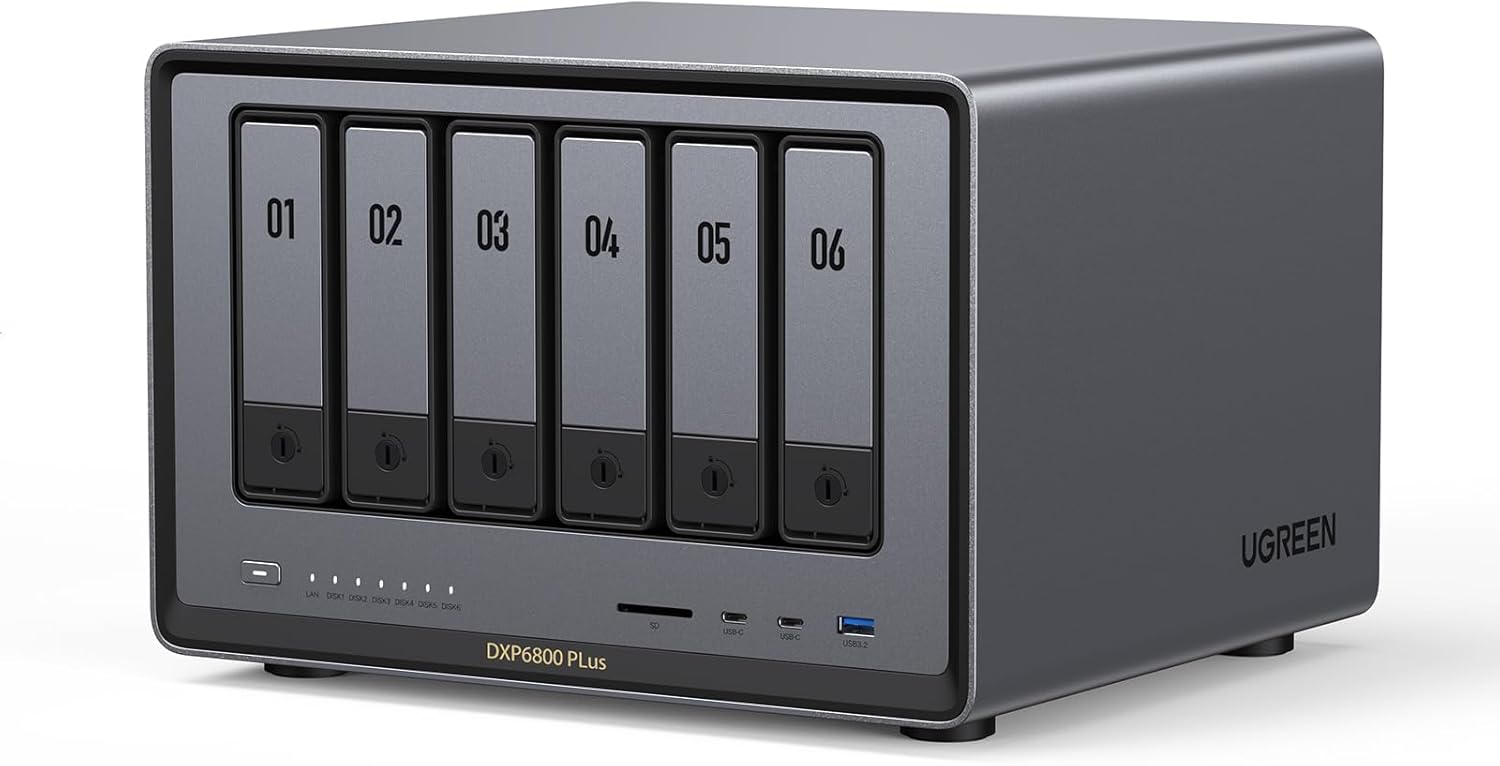
Step up to the DXP6800 Pro and you get a genuine jump in specification: an Intel Core i5 12th Gen processor, the same 8GB DDR5 RAM expandable to 64GB, but now across 6 drive bays (expandable to 8), dual 10GbE networking, two Thunderbolt 4 ports, and 8K HDMI output. This is aimed squarely at advanced users and businesses that need enterprise-level speed and scalability rather than just extra storage space.
UGREEN NASync DXP8800 Plus – Rs. 463,232
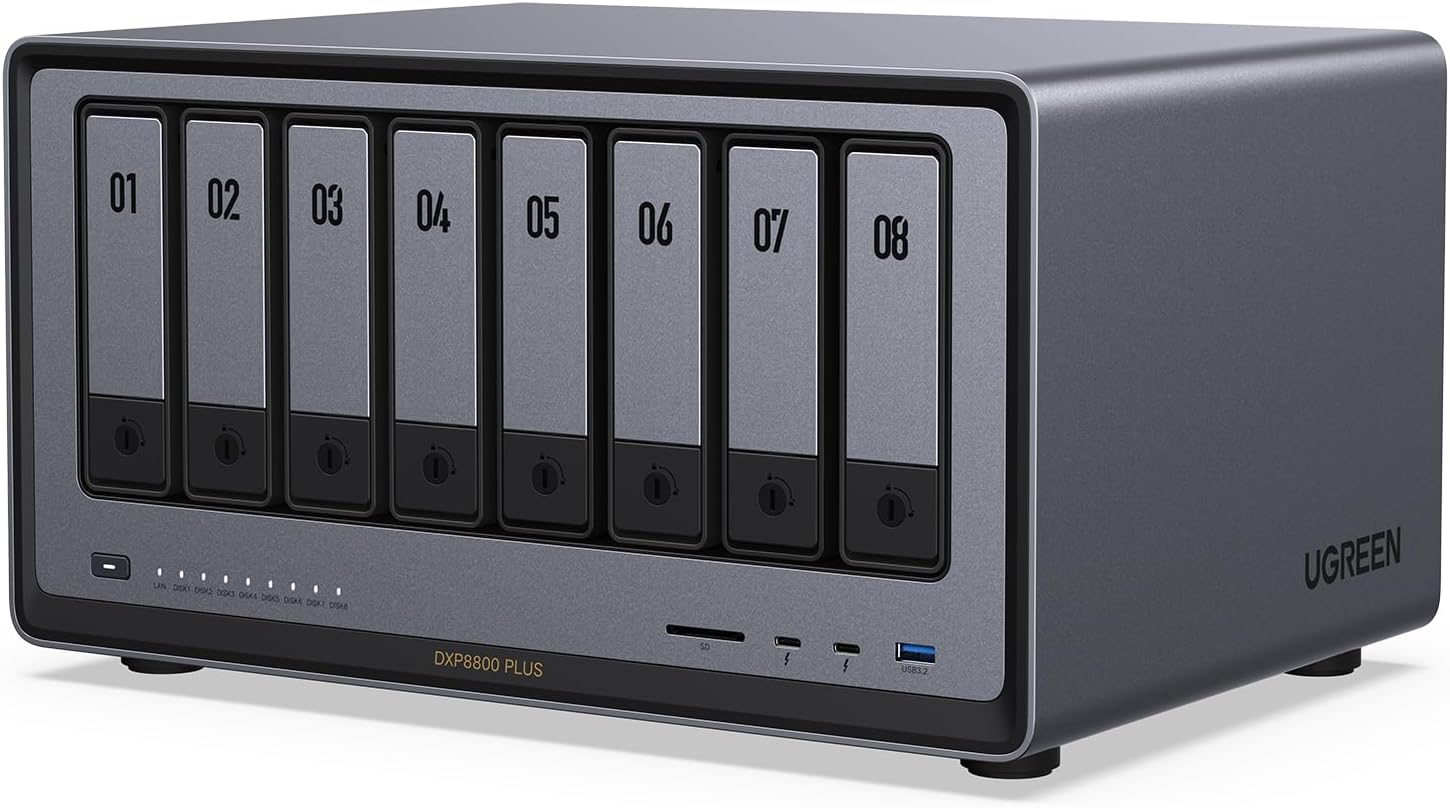
At the top of this comparison sits the DXP8800 Plus, which keeps the same Intel Core i5 12th Gen processor and dual 10GbE ports as the DXP6800 Pro, but pushes bay count up to 8, expandable to 10, for businesses and studios that need maximum local capacity alongside enterprise-grade performance.
Which One Should You Actually Buy?
If your priority is raw bay count and future headroom above everything else, the DXP8800 Plus makes sense. If you need enterprise-grade networking and processing power but don’t need more than 6 to 8 bays, the DXP6800 Pro hits a strong balance. And if you’re a smaller business just stepping up from a basic desktop NAS, the DXP4800 Plus delivers most of the same processing capability and Thunderbolt connectivity at a noticeably lower price.
Frequently Asked Questions
What’s the main hardware difference between the DXP4800 Plus and DXP6800 Pro?
The DXP4800 Plus uses an Intel X86 5-Core 12th Gen processor with 4 bays (expandable to 6) and one Thunderbolt 4 port, while the DXP6800 Pro steps up to an Intel Core i5 12th Gen processor, 6 bays (expandable to 8), and two Thunderbolt 4 ports.
Do all three models support the same maximum RAM?
Yes, all three — the DXP4800 Plus, DXP6800 Pro, and DXP8800 Plus — ship with 8GB of DDR5 RAM and are expandable up to 64GB.
Which of these three has the highest HDMI output resolution?
The DXP6800 Pro and DXP8800 Plus both support 8K HDMI output, while the DXP4800 Plus supports 4K HDMI output.
Is the DXP8800 Plus overkill for a small business?
It can be, depending on your needs. If you don’t need 8 to 10 drive bays’ worth of capacity, the DXP6800 Pro or DXP4800 Plus deliver similar processing power and connectivity at a lower price and with fewer bays to fill.
Leave a Reply